
Renovation and maintenance for public institutions
State bodies, municipalities, ministries and autonomous entities.
State agencies, departmental governments, ministries, autonomous entities and decentralised services.
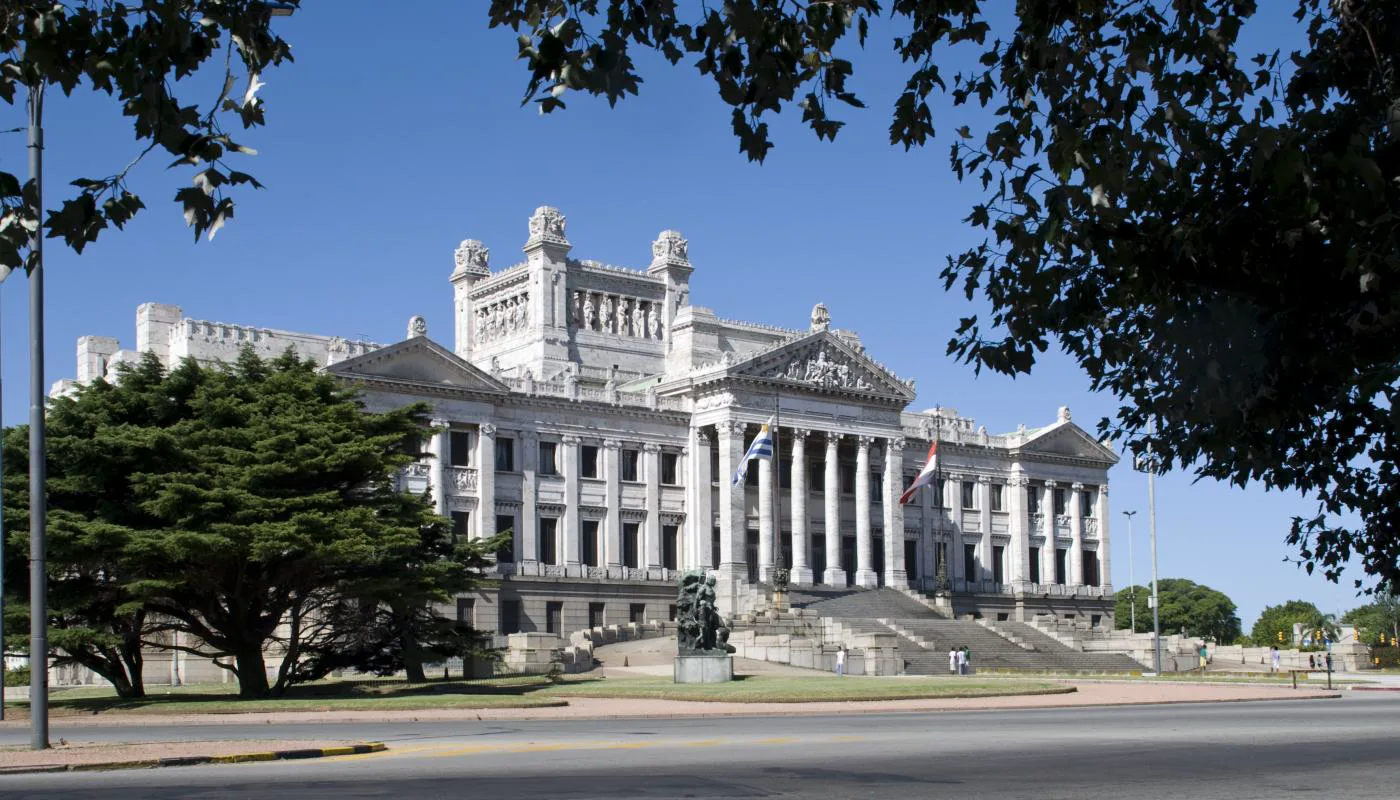
Grupo Edifica carries out renovations, fit-out and maintenance of public buildings in Montevideo and Maldonado for state agencies, ministries, departmental governments, autonomous entities, decentralised services and departmental bodies.
Technical, formal and service requirements at the same time
Continuous public service, public funds and older buildings call for a supplier who meets deadlines and justifies every cost.
A public building combines three conditions that rarely coincide in other projects. It receives a constant daily flow of citizens carrying out procedures, inquiries or formalities, and that service cannot be suspended. Its renovation is financed with public funds, subject to procurement procedures, oversight and accountability. And in many cases these are older buildings or buildings of heritage value, with accumulated defects and restrictions on how they may be altered.
For the agency, this means that hiring someone to carry out the works is not enough. It needs a supplier that submits a technically sound and formally complete bid, meets contractual deadlines, documents each stage and can justify every cost. When a supplier does not meet these requirements, the agency faces formal objections, delays, rescheduling and an additional administrative burden on its own technical teams.
A supplier prepared for state procurement
Participation in tenders and other procedures
Tenders and public procurement, with offers tailored to each call.
Grupo Edifica takes part in tenders and in the other state procurement procedures enabled by each agency, submitting bids tailored to the specific conditions of each call.
Technical documentation in accordance with tender specifications
Technical report, method, itemized budget and schedule, in the format the tender requires.
Each bid is prepared from a detailed reading of the tender documents and their technical specifications. It includes the descriptive report of the works, the execution methodology, the budget broken down by trade and the construction schedule, in the format and with the level of detail established by the tender documents. When the call provides for it, a technical visit to the building is made before quoting.
Itemised budgets and price transparency
Budgets itemized by trade, to assess the offer and control spending.
Budgets are presented broken down by trade. This approach facilitates the evaluation of the bid and the control of spending during execution.
Deadlines, traceability and accountability
Compliance with contractual deadlines
Early purchasing and in-house crews to keep the schedule and flag deviations early.
The schedule submitted with the bid becomes the tool for controlling the works. Advance planning of purchases and logistics, together with execution by our own team, makes it possible to meet committed deadlines and to alert the agency in advance to any deviation.
Traceability of the work
Every stage logged: progress, materials, equipment and incidents.
Each stage is recorded using our own management and tracking tools: physical progress, materials incorporated, equipment installed and incidents. The agency has an orderly record of the work carried out throughout the entire contract.
Reports and accountability
Regular reports for internal control and, at close, documentation and warranties.
Regular progress reports, with the level of detail the agency requires for its own internal controls, progress certifications and accountability. On completion, documentation of the work carried out and of the installed equipment, with its warranties, is handed over.
A single technical lead accountable to the agency
One technical lead as the single point of contact throughout execution.
An assigned technical lead is the agency's point of contact throughout execution. They centralise communications with the designated supervision, respond to observations and coordinate all the trades involved.
Works without interrupting public service
Work by stages and sectors, with noisy tasks outside opening hours, so the building keeps serving the public.
Interventions are planned in stages and by sectors, so that public service areas continue to operate while work is carried out in others. The noisiest tasks or the movement of materials take place outside opening hours, at night or at weekends when the agency requires it. Work areas are isolated and signposted, and safe circulation routes are maintained for the public and staff.
Diagnosis before intervention
Diagnosing building defects before intervening, to fix the cause and respect the building's heritage value.
A significant proportion of public buildings have decades of use, and some have heritage value. Damp, cracks, deterioration of render, roofs or joinery, and obsolete installations are common in these buildings.
Intervening without a prior diagnosis leads to repairs that do not resolve the cause and must be repeated. Grupo Edifica's management holds a specialisation in Building Pathology from Universidad ORT Uruguay and research experience in materials engineering at the Facultad de Ingeniería of the Universidad de la República (Udelar). This background makes it possible to identify the source of each defect, define interventions compatible with the existing materials and construction systems, and respect the conservation criteria set by the agency for buildings of heritage value.
How it works
- 01
Analysis of the call or requirement
Tender review, site visit and building survey.
Review of the tender documents or the agency's request, technical visit to the building and survey of its condition.
- 02
Bid
Technical report, method, itemized budget and schedule per the call.
Technical report, methodology, itemised budget and schedule in accordance with the conditions of the call.
- 03
Planning
Staged work plan, coordinated with supervision and building operations.
Construction plan by stages and sectors, coordinated with the agency's supervision and with the operation of the building.
- 04
Execution
Works, installations and equipment by in-house crews, with every stage logged.
Construction, installations and fit-out by our own team, under technical direction and with a record of each stage.
- 05
Close-out and maintenance
Documented handover, warranties and maintenance when the contract includes it.
Documented handover, management of equipment warranties throughout their term, and preventive and corrective maintenance when included in the contract.
What the public body gains
Bids evaluated without observations
Complete offers per the tender, with fewer queries and award delays.
Technical report, methodology, budget itemized by category and schedule, in accordance with the tender specifications. A complete bid reduces clarification requests, observations and delays in the award.
Contractual deadlines met
Early purchasing and in-house crews to hold the committed schedule.
Advance procurement planning and execution with an in-house team make it possible to maintain the committed schedule and to notify the agency in advance of any deviation.
Traceability for oversight and accountability
Every stage recorded, with the documentation internal controls require.
Each stage is recorded with its progress, the materials incorporated and the equipment installed. The agency has the documentation its internal controls require.
Interventions that do not need repeating
Diagnosing before intervening avoids failed repairs that need new funding.
In older or heritage buildings, diagnosing the source of building pathology before intervening avoids repairs that fail and must be funded again with new resources.
Scope of intervention
- Renovation and fit-out of offices and administrative areas
- Renovation of public service areas, reception areas and waiting rooms
- Public and staff restrooms, changing rooms and service areas
- Accessibility upgrades: ramps, entrances, accessible restrooms and circulation routes
- Diagnosis and treatment of damp, cracks and other building pathology
- Work on older buildings and buildings of heritage value
- Partition walls and space reconfiguration
- Renewal of plumbing and electrical installations
- Flooring, wall coverings, painting, carpentry, doors, windows and glazing
- Climate control and lighting
- Equipment, sanitaryware and faucets and fittings
- Office and public service furniture
- Preventive and corrective maintenance of buildings and installations
Team
More than 25 years of combined experience in construction, site management, technology and project management. In-house construction and installation team. Track record in the comprehensive fit-out of residential buildings for real estate developers such as Kaplan and OX Desarrollos.
Frequently asked questions
A descriptive report of the works, execution methodology, budget broken down by trade and construction schedule, in addition to the formal documentation required by the tender documents, in the format and with the level of detail they establish.
Yes. The works are planned in stages and by sectors, work areas are isolated and signposted, and the most disruptive tasks are carried out outside opening hours, at night or at weekends when the agency requires it.
Yes. Grupo Edifica's management holds a specialisation in Building Pathology, which makes it possible to diagnose the source of damp, cracks and deterioration, and to define interventions compatible with the existing materials and with the conservation criteria set by the agency.
Yes. Preventive and corrective maintenance of buildings, installations and equipment can be contracted together with the works or independently, with the scope and frequency set by the agency.
Montevideo and Maldonado, including Punta del Este, José Ignacio and La Barra.
Contact for public institutions
Let us arrange a meeting with the agency's technical or procurement department to understand its needs and the requirements of each call.